Endure vs Indure: Which Spelling Is Correct?
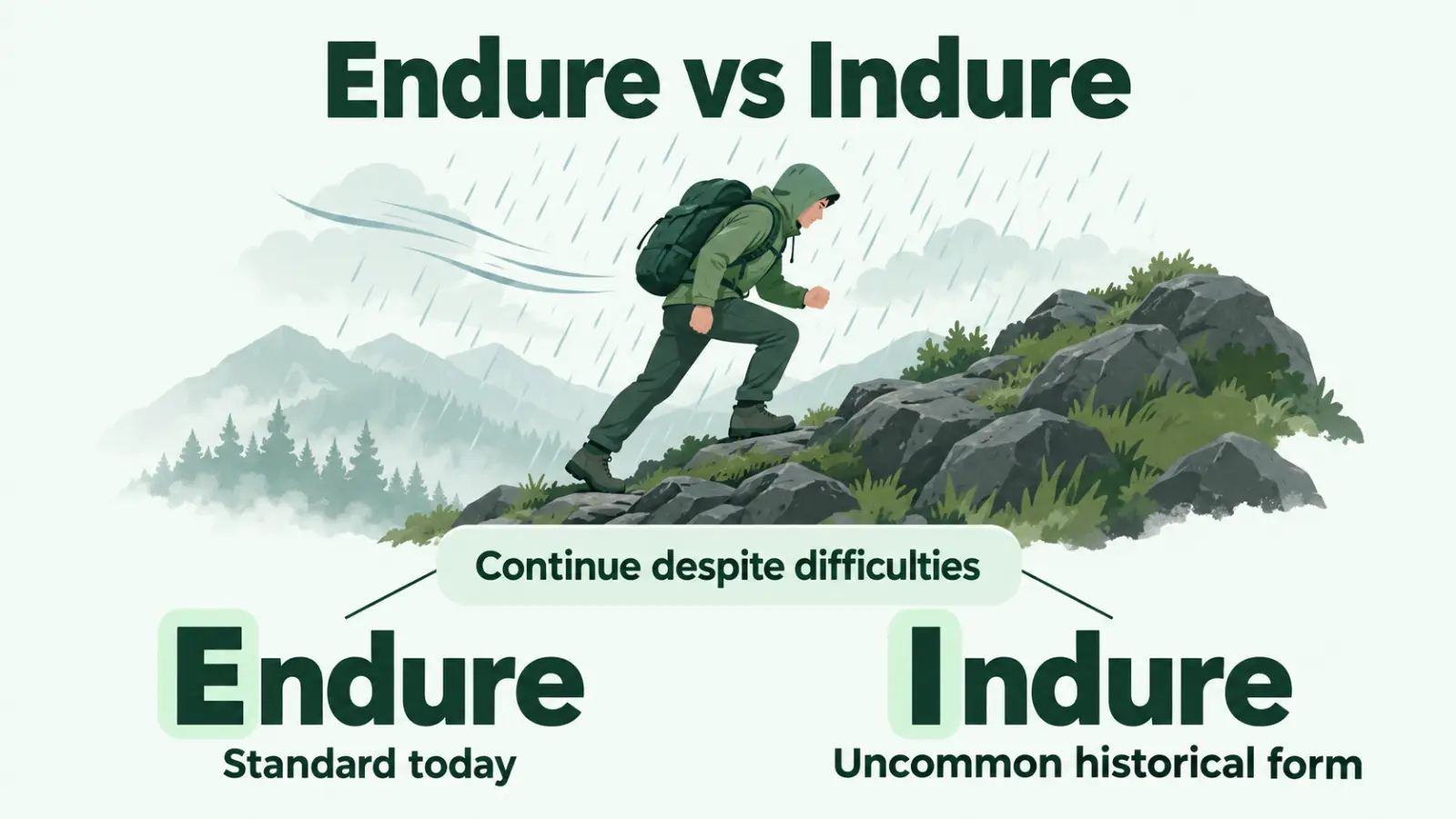
Endure is the standard spelling in contemporary American English when you mean to withstand pain, tolerate hardship, or continue despite difficulties. Indure is an uncommon historical form, not the spelling you should normally use today. For everyday conversations, school assignments, and professional writing, choose endure.
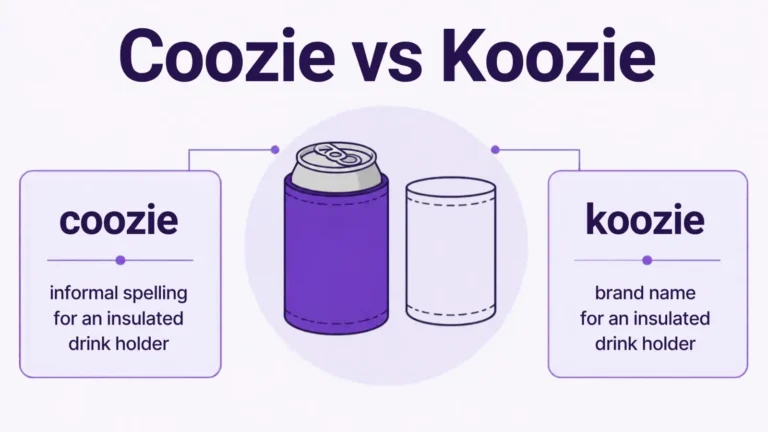
Related Post: Coozie Vs Koozie
Endure vs Indure: Quick Comparison
| Feature | ✅ Endure | ⚠️ Indure |
|---|---|---|
| Spelling status | Standard modern spelling | Rare or historical form |
| Meaning | To withstand, tolerate, or continue | Historically associated with endure |
| Part of speech | Verb | Historical verb form |
| Modern US writing | Recommended | Not recommended |
| Example | Endure the pain | Indure the pain |
| Past tense | Endured | Not used in ordinary modern writing |
Example:
❌ Not recommended: She had to indure several difficult months.
✅ Standard: She had to endure several difficult months.
Why? Endure is the established spelling for expressing the ability to withstand something difficult. Although indure has appeared in older English usage, it is not a normal alternative in contemporary edited American English.
What Does Endure Mean?
Endure is a verb with two important meanings. It can describe experiencing something difficult without giving up, or continuing to exist over time.
The meaning depends on how the word functions in the sentence.
1. Endure Means to Withstand Hardship
Endure often means to experience something painful, unpleasant, or difficult while continuing through it.
Examples:
- The hikers endured freezing temperatures during their journey.
- Maria had to endure several months of uncertainty.
- The athletes endured demanding training sessions.
- Families endured long delays after the storm.
In these examples, endure describes facing difficult circumstances over a period of time.
📌 Usage Tip: Endure does not necessarily mean enjoying a difficult experience or accepting it willingly. It means continuing through it or bearing it.
2. Endure Means to Last Over Time
Endure can also describe something that continues to exist despite time, change, or challenges.
Examples:
- Their friendship endured for decades.
- The historic building has endured through several generations.
- Some traditions endure even as communities change.
- Her influence on the organization endured long after her retirement.
These sentences do not describe someone experiencing physical pain. Instead, endure means to remain or continue.
Compare these meanings:
- Withstand: The workers endured extreme heat.
- Continue: Their partnership endured for many years.
Both uses are standard, but the context changes the meaning.
Is Indure a Real English Word?
Indure is not simply an invented spelling. Historical English dictionaries record it, including uses connected with endure. However, its presence in historical records does not make it a normal choice for modern writing.
The distinction is between an established contemporary word and a form associated with older usage.
| Context | Recommended choice |
|---|---|
| School essay | ✅ Endure |
| Professional email | ✅ Endure |
| Everyday conversation | ✅ Endure |
| Modern fiction | ✅ Endure |
| Quoting historical material | Preserve the original spelling |
| Studying historical English | Indure may be relevant |
For example, a historical document might contain indure. If you are quoting that document accurately, changing the spelling could misrepresent the original text.
However, when writing your own sentence in contemporary American English, use endure.
How to Remember the Spelling of Endure
The easiest spelling reminder is to connect endure with endurance. Both words begin with END.
Spelling pattern:
- ✅ ENDURE
- ✅ ENDURANCE
- ❌ INDURE — Not the standard modern spelling
💡 Memory Tip: Think, “I can endure until the end.” The words endure and end both begin with E.
This is a memory aid, not a claim that endure was formed from the word end.
Endure, Endured, and Enduring: Correct Forms
Endure is a regular verb. Its spelling changes when different endings are added.
| Word | Grammatical role | Example |
|---|---|---|
| Endure | Base verb | They must endure the difficult conditions. |
| Endures | Present tense, third-person singular | Their friendship endures. |
| Endured | Past tense | She endured a challenging year. |
| Endured | Past participle | They have endured many setbacks. |
| Enduring | -ing form | He is enduring a stressful situation. |
| Endurance | Related noun | The race tested her endurance. |
These verb forms are recorded.
How to Form Endured and Enduring
For the past tense, add D to endure because the word already ends in E.
✅ Endure → Endured
For the -ing form, remove the final E before adding ING.
✅ Endure → Enduring
❌ Endureing
The related adjective enduring can also mean lasting for a long time, as in “an enduring friendship.”
Common Mistakes With Endure
Mistake 1: Using Indure in a Personal Sentence
❌ Not standard: I cannot indure another week of delays.
✅ Correct: I cannot endure another week of delays.
Explanation: Endure is the modern spelling when describing the experience of tolerating something unpleasant.
Mistake 2: Using Indure for Something That Lasts
❌ Not standard: Their friendship will indure for years.
✅ Correct: Their friendship will endure for years.
Explanation: Endure can mean continue to exist. This use does not require hardship or suffering.
Mistake 3: Misspelling the Past Tense
❌ Incorrect: The workers indured difficult conditions.
✅ Correct: The workers endured difficult conditions.
Explanation: Endured is the standard past-tense form.
Endure vs Tolerate: Are They Interchangeable?
Endure and tolerate can overlap when describing unpleasant experiences, but they are not identical in every context.
- Endure often emphasizes bearing a difficult experience or continuing through it.
- Tolerate can mean accepting or allowing something without necessarily approving of it.
Compare:
- The hikers endured three days of heavy rain.
- The manager tolerates occasional interruptions during meetings.
In the first sentence, endured emphasizes experiencing difficult conditions. In the second, tolerates describes allowing or putting up with interruptions.
Endure also has a lasting-over-time meaning that tolerate does not normally share.
✅ Their friendship endured for decades.
❌ Their friendship tolerated for decades.
Quick Practice: Endure or Indure?
Choose the standard spelling for each sentence.
Question 1: The travelers had to _____ several hours of delays.
A. Endure B. Indure
Question 2: Their traditions have _____ for generations.
A. Indured B. Endured
Question 3: She is _____ a difficult period at work.
A. Enduring B. Induring
Answers and Explanations
| Question | Correct answer | Explanation |
|---|---|---|
| 1 | ✅ Endure | Standard spelling for bearing an unpleasant experience. |
| 2 | ✅ Endured | Correct past participle for something that has continued. |
| 3 | ✅ Enduring | Correct -ing form of endure. |
Indure is recorded as an obsolete spelling of endure in historical lexicographic material. It is not the recommended spelling for ordinary contemporary American English.
Endure is standard in both American and British English. The spelling is the same, although pronunciation can differ.
No. Endure can describe bearing a difficult experience, but it can also mean continuing to exist over time. For example, “The tradition endured for centuries” refers to lasting rather than suffering.
The past tense is endured. It is also the past participle. Example: She endured several unexpected challenges.
Sources
- Cambridge Dictionary — Endure — Definitions for experiencing hardship and continuing to exist.
- Oxford Advanced Learner’s Dictionary — Endure — Verb forms, definitions, and grammatical constructions.

Emily Carter is the writer behind ChuckleStation.com, a site that untangles grammar mistakes, tricky word choices, and common spelling slipups. She focuses on the errors people actually make in emails, essays, captions, and texts, then explains why they happen in plain English.
Every article pairs a clear rule with real sentences, so readers can spot the mistake and fix it fast. Emily double checks each explanation against trusted dictionaries and style guides, because getting a grammar answer wrong defeats the whole point.
She believes good writing shouldn’t feel intimidating. A little humor, a few memorable examples, and a straight answer usually do more than a page of rules.